Thanks to Julio Bermudez for organizing a fantastic symposium earlier this year. It was a pleasure to give two talks (Empirical results and Methods) to a group of highly intellectual researchers. Find more about the symposium and the recordings below:
-
Human Brain Dynamics Dissociate Early Perceptual and Late Motor-Related Stages of Affordance Processing (2023)
Wang S, Djebbara Z, de Oliveira GS, Gramann K. Human Brain Dynamics Dissociate Early Perceptual and Late Motor-Related Stages of Affordance Processing. BioRxiv 2023. https://doi.org/10.1101/2023.09.07.556516.
Find the preprint for free here.
Abstract.
Affordances, the opportunity for action offered by the environment to an agent, are vital for meaningful behavior and exist in every interaction with the environment. There is an ongoing debate in the field about whether the perception of affordances is an automated process. Some studies suggest that affordance perception is an automated process that is independent from the visual context and bodily interaction with the environment, while others argue that it is modulated by the visual and motor context in which affordances are perceived. The present paper aims to resolve this debate by examining affordance automaticity from the perspective of sensorimotor time windows. We replicated a previous study on affordance perception in which participants actively moved through doors of different width in immersive 3D virtual environments. To investigate the impact of different forms of bodily interactions with an environment, i.e., the movement context (physical vs. joystick movement), we used the identical virtual environment from Djebbara and colleagues (2019) but displayed it on a 2D screen with participants moving through different wide doors using the keys on a standard keyboard. We compared components of the event-related potential (ERP) from the continuously recorded electroencephalogram (EEG) that were previously reported to be related to affordance perception of architectural transitions (passable and impassable doors). Comparing early sensory and later motor-related ERPs, our study replicated ERPs reflecting early affordance perception but found differences in later motor-related components. These results indicate a shift from automated perception of affordances during early sensorimotor time windows to movement context dependence of affordance perception at later stages suggesting that affordance perception is a dynamic and flexible process that changes over sensorimotor stages.
-
Academy of Neuroscience for Architecture (ANFA) 2023
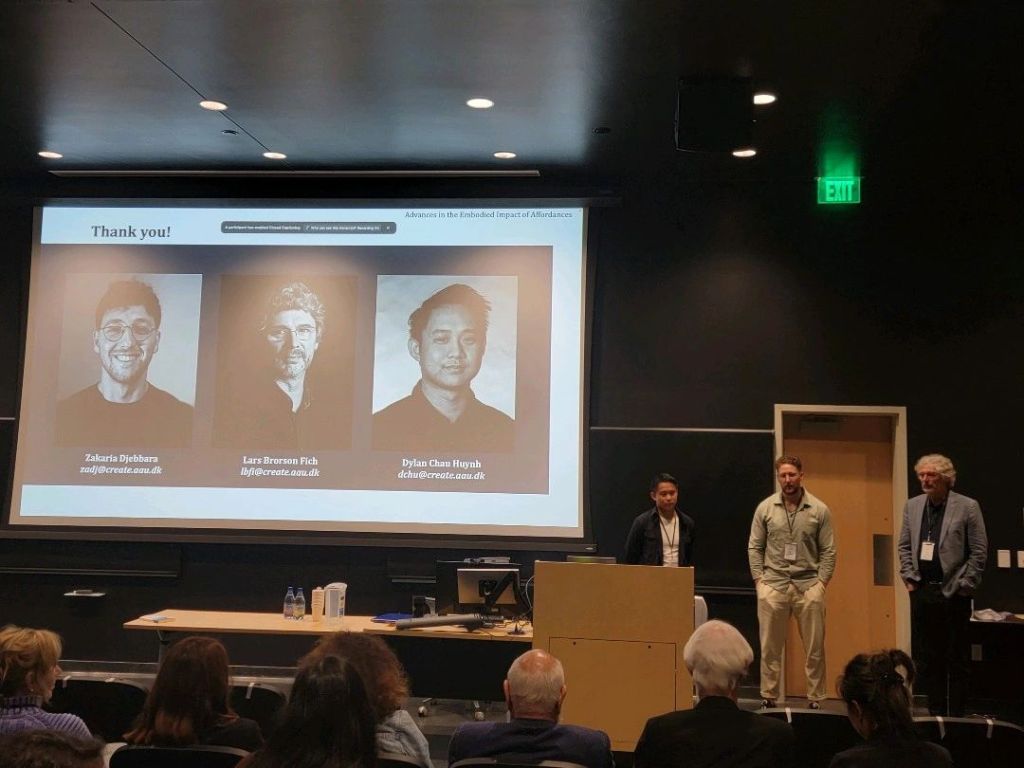
We had a wonderful time at this year’s Academy of Neuroscience for Architecture (ANFA). The progress is seriously fast with tons of young researchers in the making. Dylan Chau Huynh presented a few of his ongoing projects on working memory and architecture, and Lars Brorson Fich on the new results from the lab on stress, biophilia, and architecture.
Also very proud of my students, Mille Boye, Christina Lomholt, and Tsila Yaloz for presenting their work on navigation strategies using Virtual Reality. Our group from AAU CREATE Department of Architecture, Design & Media Technology was well-represented.
The NfA is growing, and it’s a delight to be part of it.
-
5th International Mobile Brain/Body Imaging Conference
Into naturalistic paradigms and neuroimaging?
The 5th International MoBi Conference will take place in beautiful Piran, Slovenia, June 2-5 2024! There will be data analysis workshops and various mobile body and neuroimaging presentations! Sign up here: MoBi2024
-
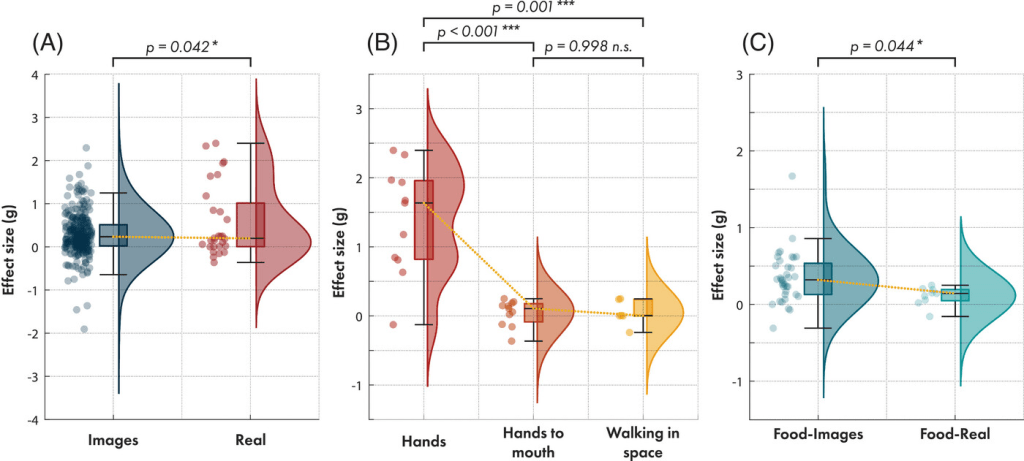
Affordances and curvature preference: The case of real objects and spaces (2023)
Djebbara, Z. and Kalantari, S. (2023) ‘Affordances and curvature preference: The case of real objects and spaces’, Annals of the New York Academy of Sciences, n/a(n/a). doi: https://doi.org/10.1111/nyas.15038.
Open access right here: https://nyaspubs.onlinelibrary.wiley.com/doi/10.1111/nyas.15038
Abstract
Chuquichambi and colleagues recently questioned the prevailing belief that a universal human visual preference exists for curved shapes and lines. Their comprehensive meta-analysis demonstrated that while curvature preference is widespread, it is not universally constant or invariant. By revisiting their dataset, we made an intriguing discovery: a negative relationship between curvature preference and an object’s “affordances.” Taking an embodiment perspective into account, we propose an explanation for this phenomenon, suggesting that the diminished curvature preference in objects with abundant affordances can be understood through the lens of embodied cognition.
-
Promoted to tenure tracked Assistant Professor at Aalborg University!
Thrilled to announce my new role as a tenure tracked Assistant Professor at Aalborg University! I will keep conducting my research, teaching, and mentoring at the Department of Architecture, Design, Media and Technology in the interdisciplinary field of Architecture and Cognitive Neuroscience. Grateful for the support received along the way.
In the coming years, my focus is on advancing the field of cognitive neuroscience and architecture by engaging in philosophical debates, conducting neuroimaging experiments, and push technological boundaries to better understand how the built environment affects us. My focus will be on: Augmented Reality, Rhythms & Neural Entrainment, and Computational Models.
Stay tuned for new projects and (possibly) PhD positions.
-
(Preprint) On Natural Attunement: Shared Rhythms Between the Brain and the Environment (2023)
Charalambous, E. and Djebbara, Z. (2023) ‘On Natural Attunement: Shared Rhythms Between the Brain and the Environment’, PsyArXiv.
Link to the preprint:
https://psyarxiv.com/3hs7w/Abstract
Rhythms exist both in the body-brain and the built environment. Becoming attuned to the rhythms of the environment, such as repetitive columns, can greatly affect perception. Here, we explore how the built environment affects human cognition and behavior through the concept of natural attunement, often resulting from the coordination of a person’s sensory and motor systems with the rhythmic elements of the environment. The article argues that the built environment should not be reduced to mere states, representations, and single variables but instead should be considered as a bundle of highly related continuous signals with which we can resonate. Resonance and entrainment are dynamic processes observed when a driven oscillatory system (e.g., the brain) oscillating at specific (intrinsic) frequencies is influenced by the dynamics of the driving system (e.g., an external signal). This paves the way for visual rhythmic stimulations of the environment to couple with and affect the brain and body through neural entrainment, cross-frequency coupling, and phase resetting. We discuss how environmental elements in actual architectural settings can affect neural dynamics, cognitive processes, and behavior in people. The article argues that the concept of rhythm is crucial in understanding the brain-body-environment relationships, and the inclusion of the built environment in ecologically valid experimentation is a necessary next step to understanding the brain in real-world settings.
-
Rhythms of the Brain, Body and Environment: A Neuroscientific Perspective on Atmospheres // Designing Atmospheres: Theory and Science (2023)
Djebbara, Z. (2023) ‘Rhythms of the Brain, Body and Environment: A Neuroscientific Perspective on Atmospheres’, in Canepa, E. and Condia, B. (eds) Designing Atmospheres: Theory and Science. Manhattan, KS: New Prairie Press.
Link to the book:
https://newprairiepress.org/ebooks/50/Book Abstract
This book was born as the legacy of the “Designing Atmospheres: Theory and Science” Symposium, an Interfaces event of the Academy of Neuroscience for Architecture (ANFA), sponsored by the EU’s Horizon 2020 MSCA Program – RESONANCES Project, the Perkins Eastman Studio, and the Department of Architecture at Kansas State University. The event was hosted in the College of Architecture, Planning and Design (APDesign), Kansas State University (K-State), Manhattan, KS, on March 28, 2023. Recent advances in science confirm many of the architects’ deep-rooted intuitions, improving knowledge about the perception of space and the meaning of architectural and urban design. This volume collects four essays: “Investigating Atmosphere in Architecture: An Overview of Phenomenological, Physiological, and Neuroscientific Methods” by Elisabetta Canepa; “Rhythms of the Brain, Body, and Environment: A Neuroscientific Perspective on Atmospheres” by Zakaria Djebbara; “A History of Tool-Atmospheres” by Kory Beighle; and “Atmospheric Histrionics” by Harry Francis Mallgrave. Bob Condia provided the introduction.
Paper Abstract
Atmospheres enjoy ambiguity beyond the constraints of words. While
the theory of atmosphere is well-established, its scientific testing remains challenging due to this ambiguity. Focusing on the effect of atmospheres, I discuss nonconscious processes and rhythms in the body and brain concerning behavior and atmosphere, arguing that the body’s active engagement with the environment is crucial in our experience. Our sensory suppression of the atmosphere is actively used to adapt our behavior, making it a phenomenologically rich process. I conclude by providing a neuroscientific hypothesis on the mechanisms behind the enacted atmosphere and its impact on human cognition.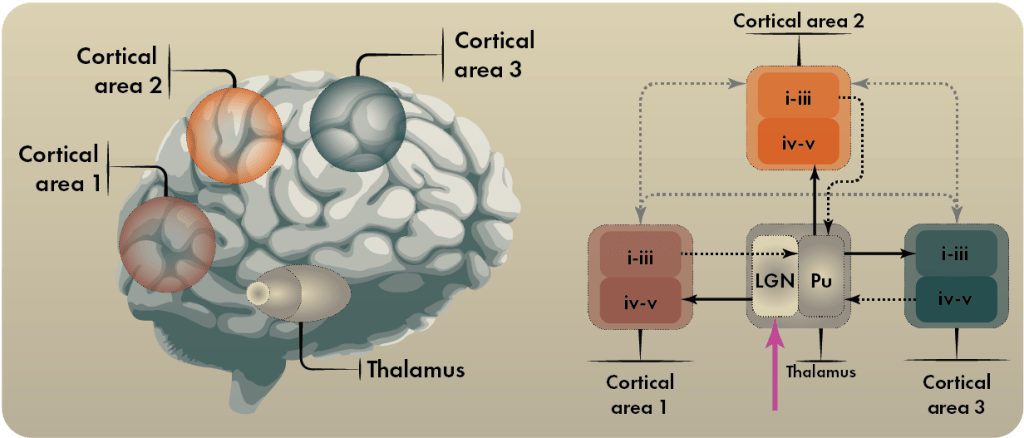
-
Lundbeck Foundation Investigator Network; LFIN (2023)
The Lundbeck Foundation Investigator Network is a community of early to mid-career and talented investigators in Denmark dedicated to exploring the vast field of neuroscience on several levels. The network brings together a diverse group of researchers from various disciplines, all united in their passion for understanding the complexity of the brain and its functions. From molecular and cellular neuroscience to cognitive and systems neuroscience, our members are committed to advancing our understanding of the brain and its disorders through cutting-edge research and collaboration.
Read more about the LFIN and how to become a member here. Also, watch our new video below!
-
Motion and Emotion: Understanding Urban Architecture through Diverse Multisensorial Engagements (2023)
Tvedebrink, T. D. O. et al. (2022) ‘Motion and Emotion: Understanding Urban Architecture through Diverse Multisensorial Engagements’, The Journal of Somaesthetics, 8(2).
Open access to full paper:
https://journals.aau.dk/index.php/JOS/article/view/7404Abstract
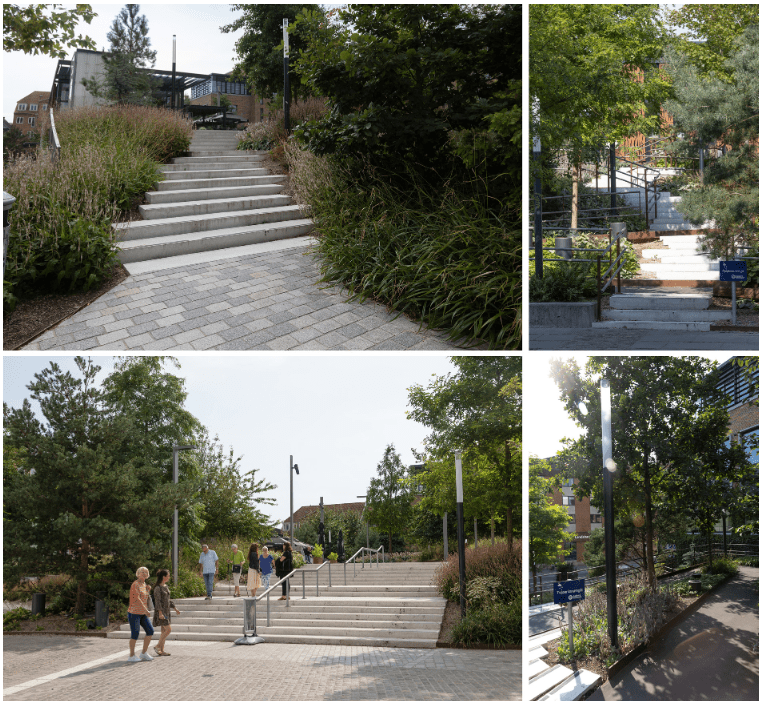
Understanding how (dis)abled human bodies interact with the built environment is critical in Urban Design. We examine if somaesthetic theory combined with a neuro-architectural framework can help advance our understanding of human bodily interaction with the built environment. We do so first from a theoretical point of view, and second with an analysis of the situated context: Budolfi Square in Aalborg, Denmark. Our take-home-message is that architects and urban designers need to move beyond the established understanding of the multi-sensory soma, into an understanding of a situated mobile-emotional soma.
 Zak's Blog