• Promoted to tenure tracked Assistant Professor at Aalborg University!

    Thrilled to announce my new role as a tenure tracked Assistant Professor at Aalborg University! I will keep conducting my research, teaching, and mentoring at the Department of Architecture, Design, Media and Technology in the interdisciplinary field of Architecture and Cognitive Neuroscience. Grateful for the support received along the way.

    In the coming years, my focus is on advancing the field of cognitive neuroscience and architecture by engaging in philosophical debates, conducting neuroimaging experiments, and push technological boundaries to better understand how the built environment affects us. My focus will be on: Augmented Reality, Rhythms & Neural Entrainment, and Computational Models.

    Stay tuned for new projects and (possibly) PhD positions.

  • (Preprint) On Natural Attunement: Shared Rhythms Between the Brain and the Environment (2023)

    Charalambous, E. and Djebbara, Z. (2023) ‘On Natural Attunement: Shared Rhythms Between the Brain and the Environment’, PsyArXiv.

    Link to the preprint:
    https://psyarxiv.com/3hs7w/

    Abstract

    Rhythms exist both in the body-brain and the built environment. Becoming attuned to the rhythms of the environment, such as repetitive columns, can greatly affect perception. Here, we explore how the built environment affects human cognition and behavior through the concept of natural attunement, often resulting from the coordination of a person’s sensory and motor systems with the rhythmic elements of the environment. The article argues that the built environment should not be reduced to mere states, representations, and single variables but instead should be considered as a bundle of highly related continuous signals with which we can resonate. Resonance and entrainment are dynamic processes observed when a driven oscillatory system (e.g., the brain) oscillating at specific (intrinsic) frequencies is influenced by the dynamics of the driving system (e.g., an external signal). This paves the way for visual rhythmic stimulations of the environment to couple with and affect the brain and body through neural entrainment, cross-frequency coupling, and phase resetting. We discuss how environmental elements in actual architectural settings can affect neural dynamics, cognitive processes, and behavior in people. The article argues that the concept of rhythm is crucial in understanding the brain-body-environment relationships, and the inclusion of the built environment in ecologically valid experimentation is a necessary next step to understanding the brain in real-world settings.

  • Rhythms of the Brain, Body and Environment: A Neuroscientific Perspective on Atmospheres // Designing Atmospheres: Theory and Science (2023)

    Djebbara, Z. (2023) ‘Rhythms of the Brain, Body and Environment: A Neuroscientific Perspective on Atmospheres’, in Canepa, E. and Condia, B. (eds) Designing Atmospheres: Theory and Science. Manhattan, KS: New Prairie Press.

    Link to the book:
    https://newprairiepress.org/ebooks/50/

    Book Abstract

    This book was born as the legacy of the “Designing Atmospheres: Theory and Science” Symposium, an Interfaces event of the Academy of Neuroscience for Architecture (ANFA), sponsored by the EU’s Horizon 2020 MSCA Program – RESONANCES Project, the Perkins Eastman Studio, and the Department of Architecture at Kansas State University. The event was hosted in the College of Architecture, Planning and Design (APDesign), Kansas State University (K-State), Manhattan, KS, on March 28, 2023. Recent advances in science confirm many of the architects’ deep-rooted intuitions, improving knowledge about the perception of space and the meaning of architectural and urban design. This volume collects four essays: “Investigating Atmosphere in Architecture: An Overview of Phenomenological, Physiological, and Neuroscientific Methods” by Elisabetta Canepa; “Rhythms of the Brain, Body, and Environment: A Neuroscientific Perspective on Atmospheres” by Zakaria Djebbara; “A History of Tool-Atmospheres” by Kory Beighle; and “Atmospheric Histrionics” by Harry Francis Mallgrave. Bob Condia provided the introduction.

    Paper Abstract

    Atmospheres enjoy ambiguity beyond the constraints of words. While
    the theory of atmosphere is well-established, its scientific testing remains challenging due to this ambiguity. Focusing on the effect of atmospheres, I discuss nonconscious processes and rhythms in the body and brain concerning behavior and atmosphere, arguing that the body’s active engagement with the environment is crucial in our experience. Our sensory suppression of the atmosphere is actively used to adapt our behavior, making it a phenomenologically rich process. I conclude by providing a neuroscientific hypothesis on the mechanisms behind the enacted atmosphere and its impact on human cognition.

  • Lundbeck Foundation Investigator Network; LFIN (2023)

    The Lundbeck Foundation Investigator Network is a community of early to mid-career and talented investigators in Denmark dedicated to exploring the vast field of neuroscience on several levels. The network brings together a diverse group of researchers from various disciplines, all united in their passion for understanding the complexity of the brain and its functions. From molecular and cellular neuroscience to cognitive and systems neuroscience, our members are committed to advancing our understanding of the brain and its disorders through cutting-edge research and collaboration.

    Read more about the LFIN and how to become a member here. Also, watch our new video below!

  • Motion and Emotion: Understanding Urban Architecture through Diverse Multisensorial Engagements (2023)

    Tvedebrink, T. D. O. et al. (2022) ‘Motion and Emotion: Understanding Urban Architecture through Diverse Multisensorial Engagements’, The Journal of Somaesthetics, 8(2).

    Open access to full paper:
    https://journals.aau.dk/index.php/JOS/article/view/7404

    Abstract

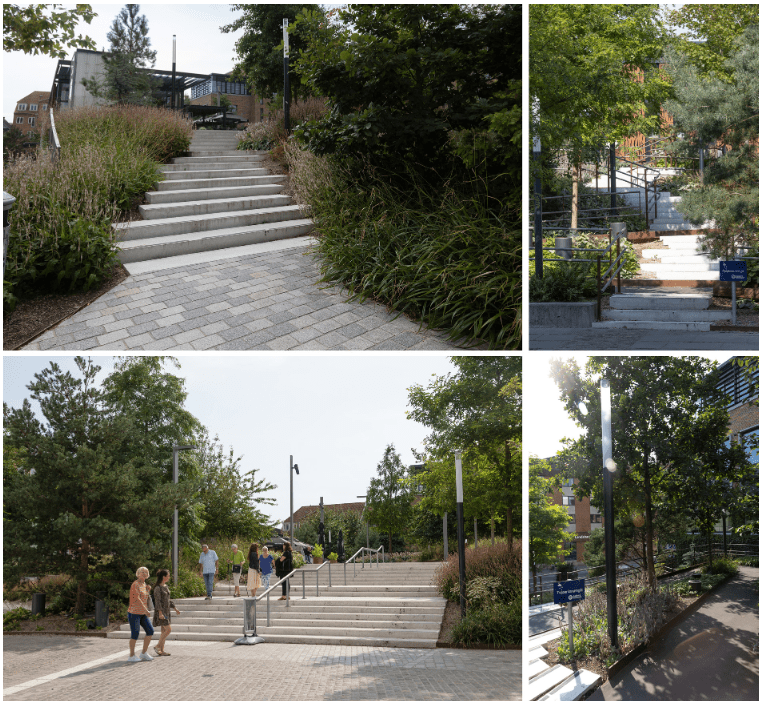
    Understanding how (dis)abled human bodies interact with the built environment is critical in Urban Design. We examine if somaesthetic theory combined with a neuro-architectural framework can help advance our understanding of human bodily interaction with the built environment. We do so first from a theoretical point of view, and second with an analysis of the situated context: Budolfi Square in Aalborg, Denmark. Our take-home-message is that architects and urban designers need to move beyond the established understanding of the multi-sensory soma, into an understanding of a situated mobile-emotional soma.

  • Time-consciousness in computational phenomenology: a temporal analysis of active inference (2023)

    Bogotá, J. D., & Djebbara, Z. (2023). Time-consciousness in computational phenomenology: a temporal analysis of active inference. Neuroscience of Consciousness, 9(1), 1–12. https://doi.org/doi.org/10.1093/nc/niad004

    Open access to full paper: https://academic.oup.com/nc/article/2023/1/niad004/7079899

    Abstract

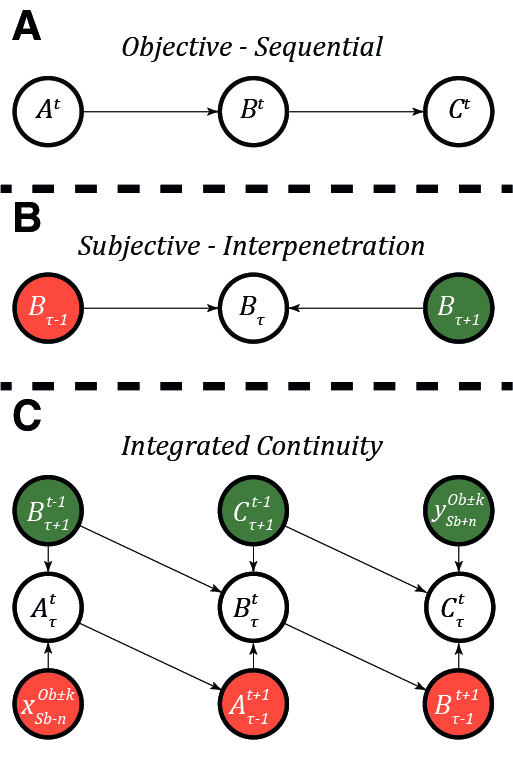
    Time plays a significant role in science and everyday life. Despite being experienced as a continuous flow, computational models of consciousness are typically restricted to a sequential temporal structure. This difference poses a serious challenge for computational phenomenology—a novel field combining phenomenology and computational modelling. By analysing the temporal structure of the active inference framework, we show that an integrated continuity of time can be achieved by merging Husserlian temporality with a sequential order of time. We also show that a Markov blanket of the present moment integrates past and future moments of both subjective temporality and objective time in an asynchronous manner. By applying the integrated continuity, it is clear that active inference makes use of both subjective temporality and objective time in an integrated fashion. We conclude that active inference, on a temporal note, qualifies as a computational model for phenomenological investigations.

  • Designing Atmospheres: Theory and Science (2023)

    Symposium taking place in Kansas State University March 28, 2023 at  8:30 AM - 12:30 PM CDT. Organized by professor Professor Bob Condia and Dr. Elisabetta Canepa. 
    
    To attend this free event, please RSVP to bcoudriet@ksu.edu, project manager of the KState P\Lab2003, by Monday, 27 March, 2023.
    Official webpage: https://www.resonances-project.com/ 

    8:30: Dr. Elisabetta Canepa (MS.Eng., Ph.D.) – The Elusiveness of Assessing the Atmospheric Essence of Architecture by Body and Emotions. She will suggest new empirical evidence for how architects can understand what atmosphere does and how it primes experiences. Elisabetta is an architect and researcher from Genoa, Italy. She is currently an EU Marie Curie Fellow running the RESONANCES project (2021–2024) in collaboration with the University of Genoa, KStateU, and Aalborg University. Her research focuses on the hybrid connection between architecture and cognitive neuroscience, analyzing topics such as atmospheric dynamics, the emotional nature of the architectural experience, embodiment theory, the empathic phenomenon between humans and space, and experimentation in virtual reality. 

    9:30: Dr. Zakaria Djebbara (Cand. Polyt., Ph.D.) – new research Rhythms in the Brain, Body, and Environment. Dr. Djebbara employs mobile electroencephalographic neuroimaging methods in combination with virtual reality and physiological measures. All attempting to understand how spatial configurations relate to human experience, cognition, and behavior. His research is supported by computational modeling of human experience and neural dynamics. He currently holds a postdoctoral position at Aalborg University (Denmark), focusing on the role of sensorimotor brain dynamics in behavioral and cognitive performance. 

    10:45: Dr. Kory Beighle – new research A History of Tool-Atmospheres. He will address the atmosphere not as an ephemeral but as a mechanism of practice. Kory received a Ph.D. from the University of Cincinnati (2020), focusing on 20th and 21st century architectural theory. In Architectural Alchemy: Collaging Disciplinarily in the Kaleidoscopic, he examines the interdisciplinary practice of Charles and Ray Eames. Dr. Beighle has also studied the role of time in architectural practice by exploring methodological intersections of film and architecture. His work as a historian, theorist, scholar, and educator is framed through design to explore the intersection of tools, pedagogy, disciplinarily, and spatial narrative in our kaleidoscopic paradigm. 

    11:30: Dr. Harry Francis Mallgrave – Atmosphere “how have architects thought about atmosphere in architecture and what it does?” Harry Francis Mallgrave is a Distinguished Prof. Emeritus from Illinois Institute of Technology and an Honorary Fellow of the Royal Institute of British Architects. He received his Ph.D. in architecture from the University of Pennsylvania and has enjoyed a career as a scholar, translator, editor, and architect. In 1996, he won the Alice Davis Hitchcock Award from the Society of Architectural Historians for his intellectual biography Gottfried Semper: Architect of the Nineteenth Century. Along with a dozen published books, his most recent book, Building Paradise: Episodes in Paradisiacal Thinking (2021), argues on behalf of a design and planning ethic centered squarely on cultural needs and personal aspirations.

    Moderator: Prof. Bob Condia, FAIA of APDesign and design partner at Condia+Ornelas Architects. His place in the neuroscience for architecture debate is as an architect and studio critic, seeking the consequences of applied biological sciences for architects. Regarding architectural affordances, atmosphere, and mood, he edited three books published by New Prairie Press: Meaning in Architecture: Affordances, Atmosphere and Mood (2019), Affordances and the Potential for Architecture (2020), and Generators of Architectural Atmosphere (2022). 
  • Neurophenomenology & Sacred Architecture. Toward a Theological Aesthetics (2023)

    Symposium taking place in Washington DC from March 23-25, 2023. Organized by professor Julio Bermudez, from The Catholic University of America. 
    
    Read more about it in ArchDaily, AHRA, H-Net, or ACSA.
    Official webpage: https://sacred-space.net/ASU-symposium/ 

    Can we use today’s and future empirical means to raise our understanding of the phenomenological effect of sacred spaces and structures, particularly as they relate to spirituality and faith? The work and thought of late neuroscientist Francisco Varela loom large here, but much has occurred since his passing, and a whole new world in neuroscience is unfolding.

    A selected number of individuals from a variety of disciplines whose works and thoughts have been significantly advancing this new area of scholarship and research will be participating in the Symposium. Such broad interdisciplinarity will allow us to view and interrogate the intersection of human spirituality and the built environment from first, second, and third-person perspectives.

    The Symposium will be organized around lectures and panels that include ample time for discussions and exchanges. The lecturers will be (in alphabetical order after their last names) neuroscientist Michael Arbib, cognitive neuroscientist Anjan Chatterjee, philosopher Gordon Graham, architect Sarah Robinson, and theologian Richard Viladesau. The panelists will be Thomas Beaudoin (theology), Jonathan Berger (music), Julio Bermudez (architecture), Elisabetta Canepa (architecture), Lin-Ching Chang (engineering and computing), Zakaria Djebbara (architecture), Harrison Fraker (architecture), Robin Jensen (art history), Juliet King (art therapy), Mohamad Koubeissi (neurology), Yoshio Nakamura (psychology), Matthew Niermann (architecture), Suchi Reddy (architecture), Carol Rickard (architecture), Milton Shinberg (architecture), and Ann Sussman (architecture).

  • Making Sense of Space: The Neuroaesthetics of Architecture (2022)

    Djebbara, Z., Fich, L. B. and Vecchiato, G. (2022) ‘Making Sense of Space: The neuroaesthetics of architecture’, in Skov, M. and Nadal, M. (eds) The Routledge International Handbook of Neuroaesthetics. 1st ed. London: Routledge.

    Link to our new book chapter right here! Always open to questions and critique; zadj@create.aau.dk

    Abstract

    In this chapter, we provide a review of the state-of-the-art neuroaesthetics of the built environment. Assuming varying levels of neuroscientific knowledge with the readers, we commence with a brief introduction to the two main methods in neuroaesthetics, namely electroencephalography (EEG) and functional magnetic resonance imaging (fMRI). To ensure an in-depth understanding of what types of questions these methods may answer, we briefly discuss the limitations of each method before reviewing the selected studies. The review commences with studies of landscapes and urban spaces followed by geometry-centered and body-centered studies and finally interiors. As we unpack the individual findings, we note what regions of the brain are involved and what tasks were performed to understand to what extent the brain is context sensitive. We find a considerable variation in brain regions to be involved, suggesting that the built environment affects global brain dynamics under different tasks. On this basis, we propose a set of regions to be involved to a larger extent, which in turn may form regions of interest in future studies of neuroaesthetics of the built environment. Finally, we suggest some major challenges facing the neuroaesthetics of architecture and point towards a potential direction for further research.

  • Affordances in Everyday Life: A Multidisciplinary Collection of Essays (2022)

    Djebbara, Z. (2022) Affordances in Everyday Life: A Multidisciplinary Collection of Essays. 1st ed. Edited by Z. Djebbara. London: Springer International Publishing.

    It’s my pleasure to announce the publication of this book, which has been in the making for 1.5 years. Link to full book right here! Happy readings!

    About the book

    The concept of affordances is being increasingly used in fields beyond ecological psychology to reveal previously unexplored interdisciplinary relationships. These fields include engineering, robotics, artificial intelligence, neuroscience, urban theory, architecture, computer science, and much more. As the concept is adapted for its relational meaning between an agent and the environment, or object, the meaning of the term has changed to fit the customs of the adapting field. This book maps the different shades of the term and brings insights into how it is operationalized by providing short accessible essays regardless of background. Each contribution addresses big questions around this topic such as the application of the concept on ongoing research, how to measure or identify affordances, as well as other reflective questions about the future of affordances in the field.

    The book is envisioned to be read by non-experts, students, and researchers from several disciplines, and fills the need for summarization across disciplines. As the many adaptations flourished from the same psychological concept, this book also aims to function as a catalyst and motivation for reinterpreting the concepts for new directions. Compared to existing books, this book aims not to span the vertical dimension of field by taking a deep dive into a niche-field—instead, this book aims to have a wide horizontal span highlighting a common concept shared by an increasing number of fields, namely affordances. As such, this book takes a different approach by attempting to summarize the different emerging applications and definitions of the concept, and make them accessible to non-experts, students, and researchers regardless of background and level.