• (Preprint) Toward a Layered Framework of Environmental Experience: Integrating Sensory, Perceptual, and Semantic Processes (2026)

    Huynh, D. C., Hussein, A. K., Behzadi, F., Kalantarifard, A., Fich, L. B., Møgelmose, A., Kühn, S., Gramann, K., & Djebbara, Z. (2026). Toward a Layered Framework of Environmental Experience: Integrating Sensory, Perceptual, and Semantic Processes (M2urj_v1). PsyArXiv. https://osf.io/preprints/psyarxiv/m2urj_v1/

    Find the full preprint here.

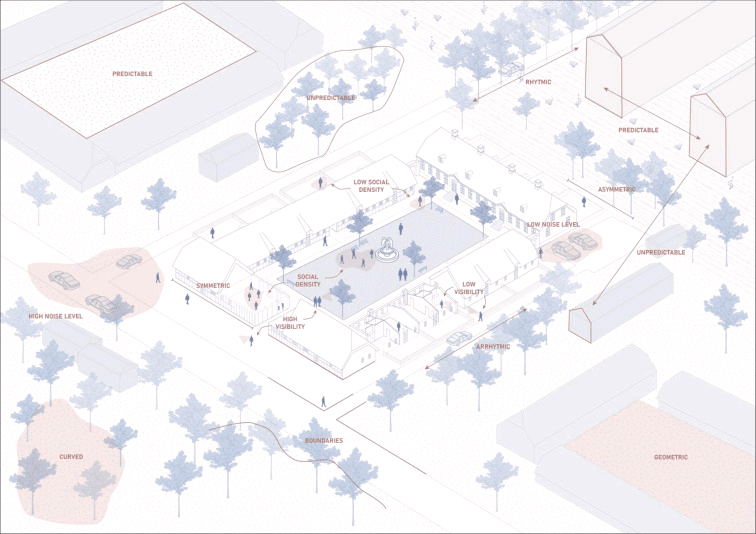
    Environmental experience is shaped by sensory stimulation, perceptual organization, and semantic meaning, yet these dimensions are often studied in isolation or reduced to broad environmental categories. This fragmentation limits our ability to explain how environments are experienced, how bottom-up and top-down processes interact, and how person-environment relations can be studied in a mechanistically informative way. Here, we provide an integrative review of work spanning embodied cognition, predictive processing, environmental psychology, and related traditions, and use this synthesis to develop a human-centered framework of environmental experience. In this framework, environmental experience unfolds across three analytically separable but experientially intertwined dimensions: sensory, perceptual, and semantic. The sensory dimension concerns immediate stimulation and salience; the perceptual dimension concerns the organization of environmental input into coherent, action-relevant structure; and the semantic dimension concerns learned meaning, cultural interpretation, familiarity, and contextual relevance. We argue that these dimensions are not sequential stages, but parallel, co-active, and mutually constraining aspects of lived environmental engagement. We then outline methodological implications for studying both dimension-specific contributions and their interaction, emphasizing convergent, multimethod, and temporally sensitive designs spanning behavioral, physiological, neurocognitive, and computational approaches. The framework provides an integrative basis for moving beyond static or overly coarse descriptions of environments and toward a more precise account of how environmental experience emerges across brain, body, and world.

  • Architecture shapes event boundaries: Theta dynamics of event segmentation during spatial transitions (2026)

    Dumesnil, M., Djebbara-Bozo, N., & Djebbara, Z. (2026). Architecture shapes event boundaries: Theta dynamics of event segmentation during spatial transitions. Brain and Environment, 100025. https://doi.org/10.1016/j.braen.2026.100025

    Find the full paper here.

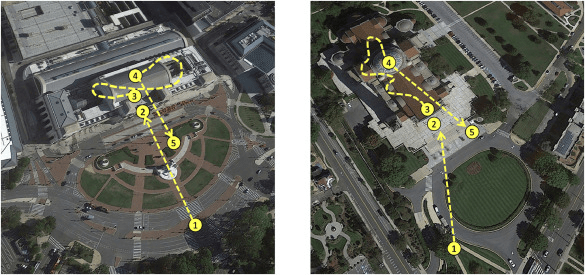
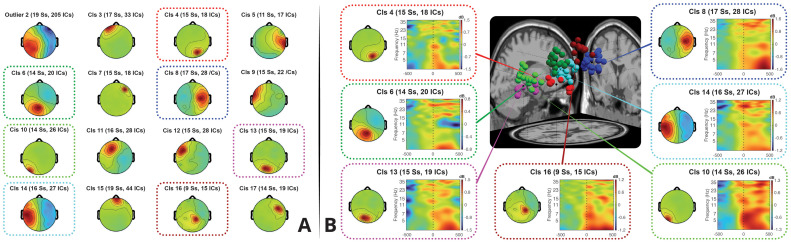
    Human experience unfolds continuously, yet it is remembered and understood as a sequence of discrete events. How the brain segments this stream of experience, particularly under naturalistic conditions, remains poorly understood. Here we investigate the neural dynamics associated with event boundaries during active navigation through architectural transitions. Using mobile electroencephalography combined with virtual reality, we analyzed data from participants freely walking between rooms and repeatedly crossing doorways. Time–frequency analysis of source-localized neural activity revealed a robust increase in theta-band power (4–8 Hz) over temporo-occipital and parietal regions approximately 300–450 ms after passing through a doorway. This effect was consistent across participants and independent component clusters, indicating a reliable neural signature of architectural transitions. We interpret this theta response within frameworks of event segmentation and Bayesian inference, suggesting that doorways trigger a transient reconfiguration of distributed neural networks when ongoing predictions can no longer be maintained and a new event model must be inferred. By preserving the natural coupling between perception, movement, and environmental structure, our findings demonstrate that architecture provides meaningful boundaries that shape brain dynamics and the organization of experience. More broadly, this work highlights the power of naturalistic experimentation and positions architectural space as an active medium for investigating how the brain structures events.

  • Cognitive-aesthetic effects of sacred vs. secular architecture on believers: A neurophenomenological exploratory study (2026)

    Bermudez, J., Chang, L.-C., Koubeissi, M. Z., Beaudoin, T., Trudeau, E., Ebadi, A., Djebbara, Z., Moore, M., Keagle, J., & Nakamura, Y. (2026). Cognitive-aesthetic effects of sacred vs. secular architecture on believers: A neurophenomenological exploratory study. Brain and Environment, 8, 100023. https://doi.org/10.1016/j.braen.2026.100023

    Find the full paper here.

    Sacred architecture has historically served to communicate religious teachings and elicit spiritual experiences. Although theologians and architects have offered explanations for this phenomenon, empirical evidence supporting these claims remains scarce. Scientific research on religious responses has usually overlooked architecture’s role in shaping them.

    This study utilizes mobile electroencephalography (EEG), physiological sensors, and self-report questionnaires to measure neural, autonomic, behavioral, and psychological responses in 32 Catholic participants exposed to religious and secular architectures: a Catholic church and a train station. Compared to the secular building, the church significantly reduced anxiety and everyday thinking while increasing perceived beauty and a sense of spiritual reality. Participants also reported feeling more connected to others and the world, and a stronger sense of faith.

    Machine learning of EEG data identified Gamma frequency, followed by Delta and Beta, as key markers distinguishing sacred from secular settings in intra-subject classification during five stops of the visit. Microstate analysis of EEG data from the entire session showed reduced temporal activation of the Default Mode Network in the church. EEG frequency analysis highlighted significantly greater parietal activation in the sacred space. Physiological and behavioral responses in the church included slower movement, lower blood pressure, higher heart rate, and decreased body temperature — effects not observed in the secular setting.

    These findings suggest that sacred architecture triggers distinct neuro-physio-phenomenological responses in Catholic believers linked to religious experience. Utilizing empirical methods to evaluate the effects of architecture and belief, this study lays the groundwork for an emerging field: experimental theological aesthetics.

  • What Counts as an Environment in Memory Research? Conceptualizing Environment Across Memory Traditions (2026)

    Huynh, D. C., Hussein, A. K., Fich, L. B., & Djebbara, Z. (2026). What Counts as an Environment in Memory Research? Conceptualizing Environment Across Memory Traditions. Wiley Interdisciplinary Reviews: Cognitive Science, 17(3), e70034. https://doi.org/10.1002/wcs.70034

    Find the full paper here.

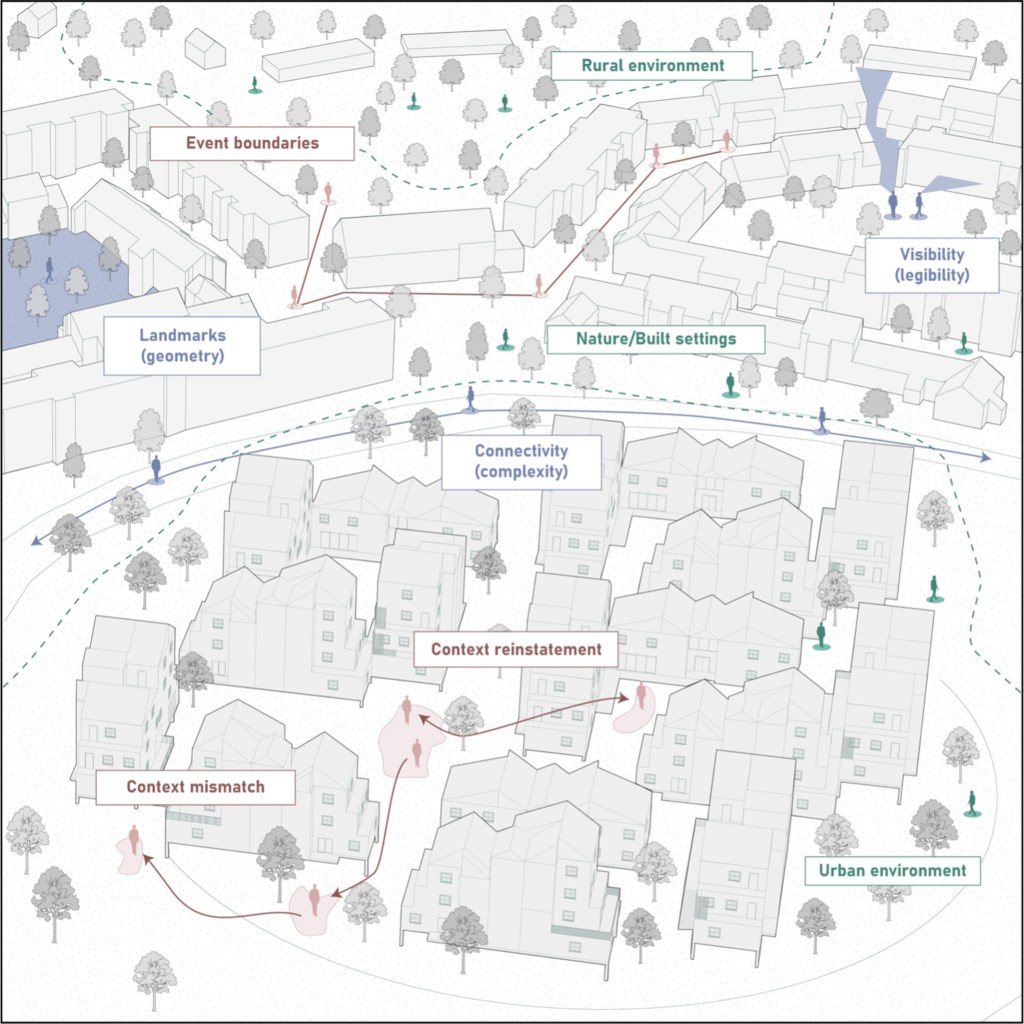
    Research on memory and the physical environment has expanded across neuroscience, environmental psychology, and spatial cognition. Yet the literature remains conceptually diverse. A central reason is that the term environment is used to refer to different kinds of phenomena across traditions. In some studies, environment is treated as a broad category, such as natural versus urban. In others, it is defined through spatial and perceptual features, such as landmarks or space geometry. It is also understood as a contextual or event-related structure that becomes bound to experience and later supports retrieval. These approaches are often discussed separately, even when they address overlapping questions about memory. This review organizes the field into three broad traditions: category-based, feature-based, and context-based accounts. We show how each tradition foregrounds different environmental properties, memory systems, and mechanisms. Category-based work most often links environment to attention and working memory, feature-based work to navigation and spatial representation, and context-based work to episodic encoding and retrieval. By placing these traditions side by side, the review clarifies how the environment has been conceptualized in memory research and how different assumptions about environment shape the questions asked, the methods used, and the kinds of memory effects that become visible. The review further proposes that environment can be understood as contributing to memory in at least three roles: as structure, as navigational scaffold, and as cue. Together, these distinctions provide a structured account of a diverse field and identify directions for future work on the relationship between environment and memory.

  • Moving beyond environmental categories in environmental psychology (2026)

    Huynh, D. C., Hussein, A. K., Behzadi, F., Kalantarifard, A., Fich, L. B., & Djebbara, Z. (2026). Moving beyond environmental categories in environmental psychology. Journal of Environmental Psychology, 111, 103016. https://doi.org/10.1016/j.jenvp.2026.103016

    Full paper can be found here.

    A growing body of research in environmental psychology demonstrates that environments influence cognition, affect, and mental health. However, environmental effects are still predominantly interpreted through broad categorical distinctions such as urban/rural and nature/built. While productive for identifying differences between settings, these categories encompass highly heterogeneous environments with fundamentally different perceptual, spatial, social, and structural properties. As a result, findings across the literature remain difficult to reconcile, and the mechanisms linking environmental exposure to psychological outcomes often remain underspecified. In this review, we argue that environmental influences on cognition and mental health are better understood in terms of feature-specific interactions rather than categorical environment types. Drawing on evidence from environmental psychology and cognitive neuroscience, we show that the psychological effects of environments cut across conventional distinctions and vary substantially both within and between settings. We synthesize findings demonstrating how category-based approaches obscure mechanistic understanding and limit theoretical integration, particularly across disciplines. To address these limitations, we propose a feature-based approach in which environments are conceptualized as multidimensional profiles and organized into a minimal set of feature families aligned with temporal scales of processing (sensory, perceptual, and semantic process). This scaffold links environmental specification to mechanistic hypotheses and measurable variables, providing a principled basis for interpreting heterogeneity in cognitive and mental health findings and for advancing cumulative theory, method, and application in environmental psychology.

  • Indoor environmental quality and the brain: A systematic review of physiological and neural evidence (2026)

    Rad, P. N., Behzadi, F., Kalantarifard, A., Nazemi, N., & Djebbara, Z. (2026). Indoor environmental quality and the brain: A systematic review of physiological and neural evidence. Building and Environment, 294, 114405.

    Link to full paper.

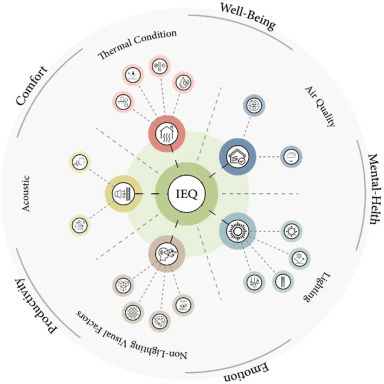
    Indoor environmental quality (IEQ) encompasses the conditions inside a building and their effects in shaping occupants’ cognitive functions. As cognitive performance is fundamentally rooted in neural and physiological processes, any influence of IEQ on humans necessarily begins with its impact on the brain and body, through neural and physiological responses. Previous studies on IEQ have primarily focused on outcomes such as comfort, productivity, etc., whereas the physiological and neural pathways underlying these effects on the human body and brain remain insufficiently explored. This present review synthesizes empirical studies on how different IEQ components, including thermal environment, air quality, acoustics, lighting, and non-light visual factors, affect human physiological and brain-related responses across four key themes: comfort, health and well-being, productivity, and emotion. A detailed manual review was conducted on 32 empirical studies, followed by a co-occurrence analysis of keywords and abstracts from 6,006 publications to map the relationships between IEQ and brain or body responses. Overall, the findings suggest that IEQ has a significant influence on physiological states and brain activity, with distinct effects depending on the specific factor examined. Notably, the majority reported associations between IEQ variables, particularly temperature, and non-light visual factors with measurable neural and physiological changes. These insights can guide the design of healthier indoor environments that promote productivity, comfort, and well-being. Future studies should aim to establish standardized methodologies and explore long-term effects in real-world contexts.

  • Unexpected Applications of the Free Energy Principle and Surrealism for Art Therapy (2025)

    Djebbara, Z., Mazumder, R., & King, J. L. (2025). Unexpected Applications of the Free Energy Principle and Surrealism for Art Therapy. Leonardo, 98–104.

    Full paper here.

    Predictive coding, as proposed by the Bayesian brain hypothesis, and surrealism present an intriguing overlap. The Bayesian brain hypothesis views the brain as a probabilistic inference system that updates its beliefs based on sensory inputs, while surrealism explores the unconscious mind by challenging conventional thought and societal norms. This paper frst demonstrates how the Bayesian brain hypothesis serves as a neo-surrealistic framework for understanding brain function. It then explores how the Bayesian brain hypothesis and surrealist techniques can be integrated to generate valuable insights about the human unconscious for art therapy. This convergence broadens scientifc understanding by opening new avenues for research and practical applications at the intersection of neuroscience and art therapy, ultimately enhancing therapeutic outcomes for individuals seeking psychological support.

  • Turning corners in built environments shifts spatial attention costs (2025)

    Djebbara, Z., Huynh, D. C., Koselevs, A., Chen, Y., Fich, L. B., & Gramann, K. (2025). Turning corners in built environments shifts spatial attention costs. NeuroImage, 121549.

    Link to full paper.

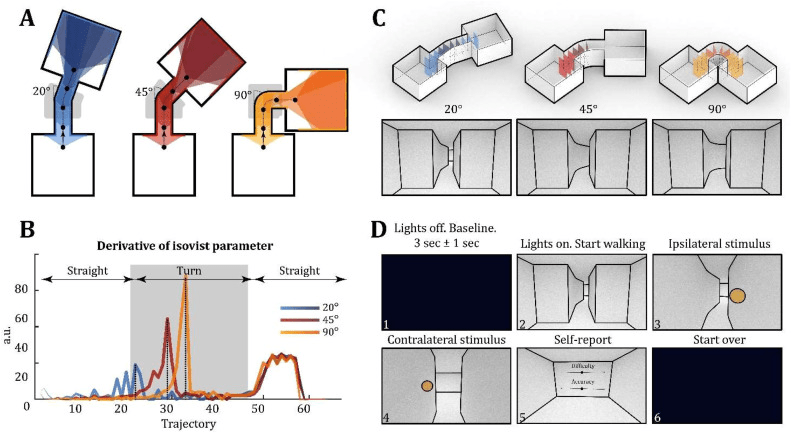
    Human attention is typically studied under static laboratory conditions, yet everyday cognition unfolds during active interactions with the built environment. Here we show that architectural features such as corners not only cue spatial attention but can shift canonical attention cueing costs. Using Mobile Brain/Body Imaging in a naturalistic Virtual Reality (VR), participants physically navigated corridors with varying turning angles while responding to visual targets appearing either congruent or incongruent with the turn direction. We show a shift in attention costs of the classic congruency effect with faster and more accurate responses to incongruent stimuli, emerging at ∼15° for accuracy and ∼30° for response times. This suggests that embodied movements engage attentional dynamics distinct from traditional desktop experiments. We found that the early (N1) and late (P3) attention-related electrophysiological responses were modulated by environmental features and motor demands. N1 amplitudes decreased and P3 responses were attenuated for sharper turns, particularly in congruent conditions, reflecting the redistribution of attentional resources under increased visuomotor demands. We propose that congruent stimuli, displayed against a backdrop of novel visual information, increases cognitive load and slows early visual processing that affect behavioral responses. Incongruent stimuli are, however, displayed against a backdrop of predictable visual information allowing faster target processing. These findings demonstrate that naturalistic locomotion can invert classical attention patterns, highlighting how architectural geometry shapes perception, cognition, and action.


  • (Chapter) Weaving Memories into Place: Exploring the relation between the built environment and associative memory (2025)

    Huynh, D. C., Fich, L. B., & Djebbara, Z. (2025). Weaving Memories into Place: Exploring the relation between the built environment and associative memory. In Routledge Handbook of Neuroscience and the Built Environment (pp. 1–18). Taylor & Francis.

    Link to paper.

    This chapter explores the concept of associative memory which is a fundamental cognitive process that enables us to associate memories across various levels of information, experience, and emotion. Associative memory is integral to our navigation of the world as it facilitates the recall of locations as well as sensory details and emotional nuances associated with those spaces. This process is driven by the capacity to forge connections among seemingly unrelated elements of our experiences. The resulting interconnected web of associations both enriches our memory but also aids in emotionally orienting ourselves in environments. Through these associations, we develop a nuanced understanding of space and place, allowing us to construct mental images that shape experiences and guide behaviors. By discussing insights from neuroscience, architecture, planning, and cognitive psychology we explore how our memories inform our interactions with the built environment. Ultimately this exploration aims to illustrate the profound impact of associative memory on our ability to remember, navigate, and emotionally connect with the world around us. Our chapter provides different types of insights relevant for architects and urban planners, facilitating new insights into the process of creating environments that resonate with human experience.

  • The impact of built and natural environments on working memory: A systematic literature review (2025)

    Huynh, D. C., Brorson Fich, L., & Djebbara, Z. (2025). The impact of built and natural environments on working memory—A systematic literature review. Journal of Environmental Psychology, 107, 102763.

    Link to full paper.

    This systematic literature review examines the complex relationship between the physical environment and working memory essential for everyday life. As urbanization accelerates and the built environment becomes more complex, impacting natural environments as well, understanding how environmental factors influence working memory is becoming increasingly critical. This review synthesizes findings from 34 empirical studies investigating the effects of different environmental settings, ranging from urban environments to natural landscapes on working memory performance or development. We categorize these findings into three key themes that reflect how this relation has been studied: Dynamic Environmental Exposure, which refers to settings where individuals actively engage with their surroundings; Passive Environmental Exposure, which encompasses studies where participants remain stationary while being exposed to environmental stimuli; and Neighborhood Characteristics, which include broader aspects of our living environments that shape daily experiences and may influence working memory over extended periods. The review discusses the findings with reference to ecological validity of experimental setups, the challenge of describing physical settings, and future implications of the research, while also encouraging interdisciplinary collaboration among architects, urban planners, psychologists, and neuroscientists. This work also contributes to the growing discourse on how the design of our physical settings effects cognition, thereby health and well-being.