• Unexpected Applications of the Free Energy Principle and Surrealism for Art Therapy (2025)

    Djebbara, Z., Mazumder, R., & King, J. L. (2025). Unexpected Applications of the Free Energy Principle and Surrealism for Art Therapy. Leonardo, 98–104.

    Full paper here.

    Predictive coding, as proposed by the Bayesian brain hypothesis, and surrealism present an intriguing overlap. The Bayesian brain hypothesis views the brain as a probabilistic inference system that updates its beliefs based on sensory inputs, while surrealism explores the unconscious mind by challenging conventional thought and societal norms. This paper frst demonstrates how the Bayesian brain hypothesis serves as a neo-surrealistic framework for understanding brain function. It then explores how the Bayesian brain hypothesis and surrealist techniques can be integrated to generate valuable insights about the human unconscious for art therapy. This convergence broadens scientifc understanding by opening new avenues for research and practical applications at the intersection of neuroscience and art therapy, ultimately enhancing therapeutic outcomes for individuals seeking psychological support.

  • Turning corners in built environments shifts spatial attention costs (2025)

    Djebbara, Z., Huynh, D. C., Koselevs, A., Chen, Y., Fich, L. B., & Gramann, K. (2025). Turning corners in built environments shifts spatial attention costs. NeuroImage, 121549.

    Link to full paper.

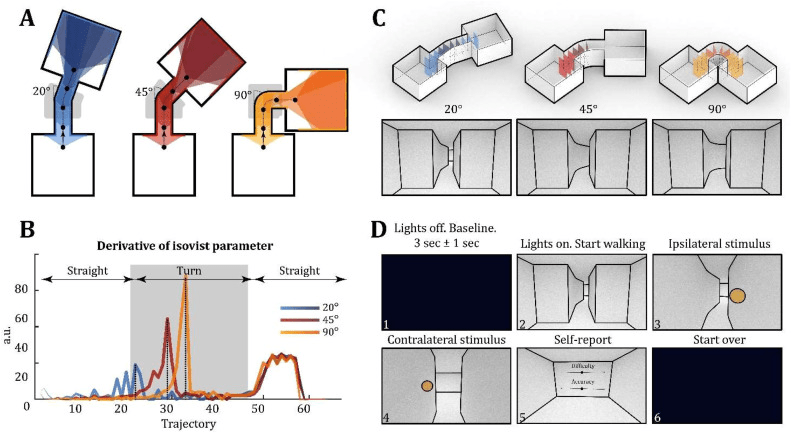
    Human attention is typically studied under static laboratory conditions, yet everyday cognition unfolds during active interactions with the built environment. Here we show that architectural features such as corners not only cue spatial attention but can shift canonical attention cueing costs. Using Mobile Brain/Body Imaging in a naturalistic Virtual Reality (VR), participants physically navigated corridors with varying turning angles while responding to visual targets appearing either congruent or incongruent with the turn direction. We show a shift in attention costs of the classic congruency effect with faster and more accurate responses to incongruent stimuli, emerging at ∼15° for accuracy and ∼30° for response times. This suggests that embodied movements engage attentional dynamics distinct from traditional desktop experiments. We found that the early (N1) and late (P3) attention-related electrophysiological responses were modulated by environmental features and motor demands. N1 amplitudes decreased and P3 responses were attenuated for sharper turns, particularly in congruent conditions, reflecting the redistribution of attentional resources under increased visuomotor demands. We propose that congruent stimuli, displayed against a backdrop of novel visual information, increases cognitive load and slows early visual processing that affect behavioral responses. Incongruent stimuli are, however, displayed against a backdrop of predictable visual information allowing faster target processing. These findings demonstrate that naturalistic locomotion can invert classical attention patterns, highlighting how architectural geometry shapes perception, cognition, and action.


  • (Chapter) Weaving Memories into Place: Exploring the relation between the built environment and associative memory (2025)

    Huynh, D. C., Fich, L. B., & Djebbara, Z. (2025). Weaving Memories into Place: Exploring the relation between the built environment and associative memory. In Routledge Handbook of Neuroscience and the Built Environment (pp. 1–18). Taylor & Francis.

    Link to paper.

    This chapter explores the concept of associative memory which is a fundamental cognitive process that enables us to associate memories across various levels of information, experience, and emotion. Associative memory is integral to our navigation of the world as it facilitates the recall of locations as well as sensory details and emotional nuances associated with those spaces. This process is driven by the capacity to forge connections among seemingly unrelated elements of our experiences. The resulting interconnected web of associations both enriches our memory but also aids in emotionally orienting ourselves in environments. Through these associations, we develop a nuanced understanding of space and place, allowing us to construct mental images that shape experiences and guide behaviors. By discussing insights from neuroscience, architecture, planning, and cognitive psychology we explore how our memories inform our interactions with the built environment. Ultimately this exploration aims to illustrate the profound impact of associative memory on our ability to remember, navigate, and emotionally connect with the world around us. Our chapter provides different types of insights relevant for architects and urban planners, facilitating new insights into the process of creating environments that resonate with human experience.

  • The impact of built and natural environments on working memory: A systematic literature review (2025)

    Huynh, D. C., Brorson Fich, L., & Djebbara, Z. (2025). The impact of built and natural environments on working memory—A systematic literature review. Journal of Environmental Psychology, 107, 102763.

    Link to full paper.

    This systematic literature review examines the complex relationship between the physical environment and working memory essential for everyday life. As urbanization accelerates and the built environment becomes more complex, impacting natural environments as well, understanding how environmental factors influence working memory is becoming increasingly critical. This review synthesizes findings from 34 empirical studies investigating the effects of different environmental settings, ranging from urban environments to natural landscapes on working memory performance or development. We categorize these findings into three key themes that reflect how this relation has been studied: Dynamic Environmental Exposure, which refers to settings where individuals actively engage with their surroundings; Passive Environmental Exposure, which encompasses studies where participants remain stationary while being exposed to environmental stimuli; and Neighborhood Characteristics, which include broader aspects of our living environments that shape daily experiences and may influence working memory over extended periods. The review discusses the findings with reference to ecological validity of experimental setups, the challenge of describing physical settings, and future implications of the research, while also encouraging interdisciplinary collaboration among architects, urban planners, psychologists, and neuroscientists. This work also contributes to the growing discourse on how the design of our physical settings effects cognition, thereby health and well-being.

  • Investigating the effects of landmarks on memory performance (2025)

    Huynh, D. C., Fich, L. B., & Djebbara, Z. (2025). Investigating the effects of landmarks on memory performance. Brain and Environment, 3, 100004.

    Link to full paper here.

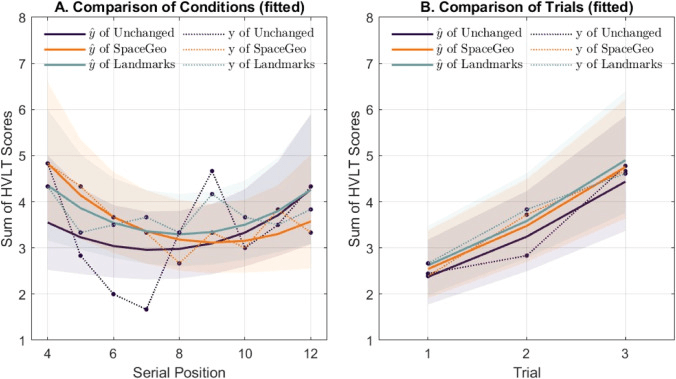
    The built environment profoundly influences our brain, shaping how we perceive, remember, and interact with the world around us. Far from serving solely aesthetic or functional purposes, specific elements and characteristics of cities can have an impact of specific cognitive processes. For instance, landmarks in urban settings play a pivotal role in guiding navigational decision making and behavior, helping us to orientate ourselves, and move through complex spaces by remembering different details of the environment. Despite this understanding, the ways in which diverse environmental features affect memory remain largely unexplored. This study investigates the impact of landmarks on memory performance within a virtual urban environment. Using the Hopkins Verbal Learning Test, a measure of verbal episodic memory, in combination with immersive head-mounted Virtual Reality, participants (n = 35) navigated a virtual cityscape designed with distinct environmental variations. The conditions include landmarks, space geometry, and an unchanged condition. Results reveal that participants exposed to Landmarks and Space Geometry demonstrated enhanced episodic memory performance compared to those navigating through the unchanged condition. Specifically, participants exhibited a faster learning rate between trials and improved memory retention in environments featuring landmarks and space geometry. These findings highlight the impacts of environmental distinctiveness and suggest that both landmarks and space geometry serve as effective mnemonic components in episodic memory tasks.

  • (Preprint) Color and Pattern of Material Reflect Thermal Perception in Early Brain Dynamics (2025)

    Kalantarifard, A., Faizi, M., Ekhlassi, A., Behzadi, F., & Djebbara, Z. (2025). Color and Pattern of Material Reflect Thermal Perception in Early Brain Dynamics (SSRN Scholarly Paper No. 5332545). Social Science Research Network.

    Link to paper here.

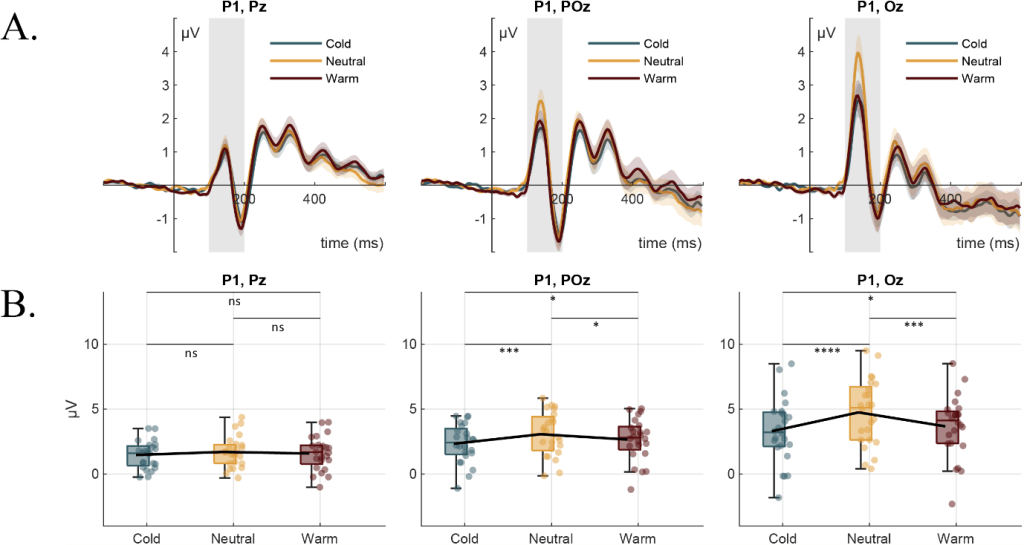
    Thermal perception within indoor environments is shaped by the integration of multiple sensory inputs, with visual stimuli playing a critical role. While existing work has demonstrated that room color can influence thermal perception under directed attention, it remains unknown how this effect manifests when the colored environment is perceived passively during an ongoing cognitive task. In this study, we investigated the combined effect of wooden materials’ visual characteristics—namely, color and pattern—on evoked brain responses. A combination of three wooden colors (Warm, Neutral, and Cold) and three pattern complexities (No-, Simple-, and Complex-Pattern) formed nine different Virtual Reality (VR) environments. Subjective thermal evaluations and ongoing neural responses were recorded via electroencephalography (EEG) during an Oddball paradigm task (N = 24). Subjective reports demonstrate that wood colors and patterns significantly affected thermal perception. We extracted the P1 and P2 components over the parieto-occipital area and analyzed them using a mixed linear effects regression, demonstrating the impact of wood color on P1 and pattern complexity on P2. Our study indicates that early attentional processes are significantly influenced by color, with warmer hues leading to an increase in perceived temperature. Although the effect of pattern on thermal perception appears to be relatively minor, denser visual patterns were still associated with a further rise in perceived warmth. Future research could compare the visual impact of various materials on thermal perception.


  • Contemplative neuroaesthetics in architecture: A real-world mobile EEG study in the ancient city of Ghardaïa, Algeria (2025)

    Zair, N., Boussora, K., & Djebbara, Z. (2025). Contemplative neuroaesthetics in architecture: A real-world mobile EEG study in the ancient city of Ghardaïa, Algeria. Frontiers of Architectural Research, 14(5), 1311–1327.

    Link to paper here.

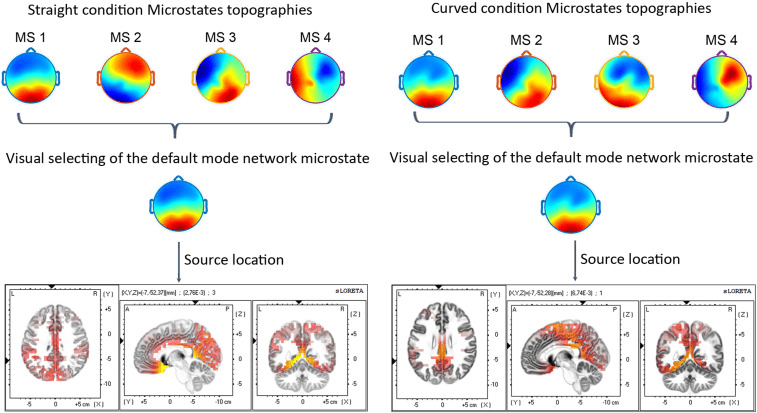
    This study investigates the potential of built environments to induce contemplative states, contributing to the emerging field of contemplative neuroaesthetics. While the psychological benefits of these states are well-documented, their relationship with architecture remains underexplored. Using an embodied cognition framework, we explore how architectural features engage the sensorimotor system, fostering contemplative experiences. The ancient city of Ghardaïa, known for its natural harmony and subtle aesthetics, was the case study. Twenty participants, with no prior exposure to the site or architectural background, took part in a real-world experiment. They followed a designated path while equipped with a 32-channel mobile EEG system, smart band, and wide-angle cameras. Subjective feedback was collected via questionnaires. Multiple linear regression revealed that curved pathways significantly reduced Default Mode Network (DMN) activity, suggesting heightened sensorimotor engagement, potentially inducing a contemplative state. Conversely, higher occlusivity, measured through space syntax, correlated with increased DMN activity, indicating enclosed spaces promote introspection. Architectural features like corbels, arches, and landmarks also influenced DMN activity, highlighting spatial elements’ role in shaping brain dynamics. Future research should examine architectural contexts to clarify these mechanisms, with implications for designing spaces that promote well-being.

  • Architectural atmospheres, priming effects and first impressions: A multi-perspective approach integrating self-report assessments and physiological responses (2025)

    Canepa, E., Djebbara, Z., Güler, K., Andrighetto, L., Schiavetti, I., Scelsi, V., Jelić, A., & Condia, B. (2025). Architectural atmospheres, priming effects and first impressions: A multi-perspective approach integrating self-report assessments and physiological responses. Architectural Science Review, 68(5), 379–391.

    Link to full paper here.

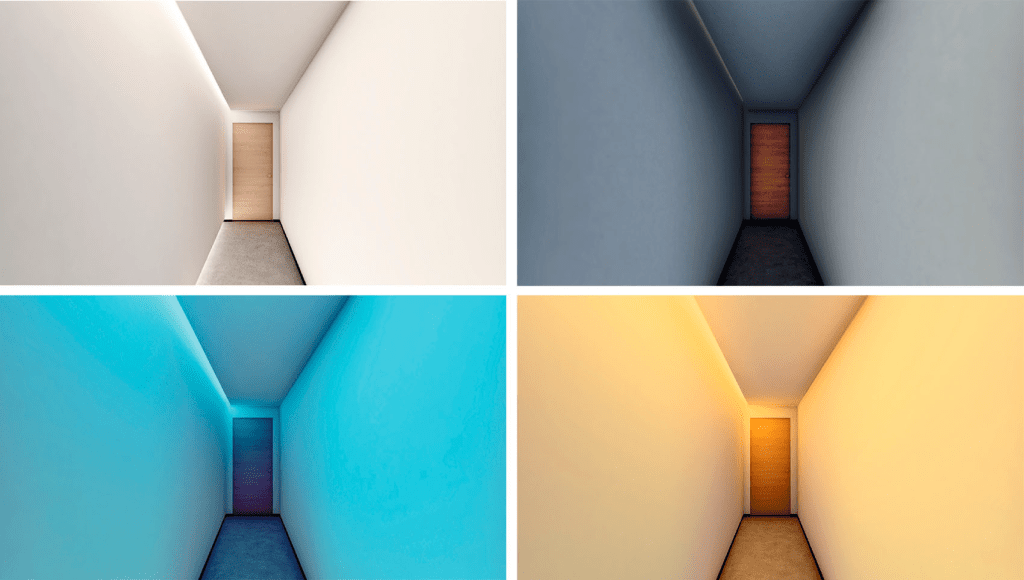
    This paper studies the priming effects of architectural atmospheres on our first impressions of space. We applied a multi-perspective approach combining first-person-perspective insights (self-report assessments) with third-person-perspective measures (physiological responses) to four corridor iterations connecting an empty room to a contemplative space. The starting and ending rooms remained unchanged, whereas the corridor’s light varied: dark, blue, amber and bright. Participants (n = 81) walked through virtual-reality environments wearing sensors collecting blood volume pulse and skin conductance data. Our investigation was whether and, if so, how the corridor’s atmosphere primed and altered participants’ impressions of the subsequent room, even if identical. Results revealed stronger skin conductance responses while moving through darker corridors, which correlated with altered perceptions of the ending room at conscious and nonconscious levels. Generalized linear model analysis showed that, with increasing age, participants were more likely to report altered perceptions.

  • Adaptive facades for emotionally enriching indoor environments (2024)

    Beatini, V., Pantilimonescu, F., Djebbara, Z., & Drișcu, M.-C. (2024). Adaptive facades for emotionally enriching indoor environments. Journal of Building Engineering, 98, 111472. https://doi.org/10.1016/j.jobe.2024.111472

    Link to full paper here.

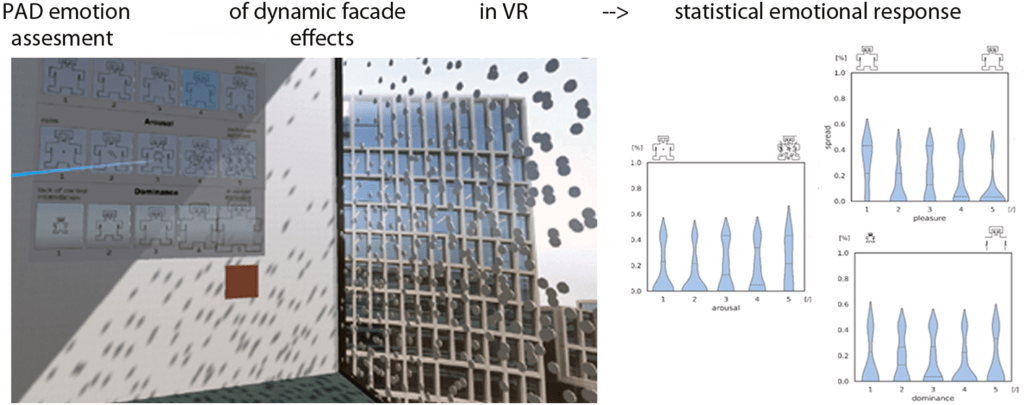
    Buildings are increasingly required to have a restorative effect as people spend a significant portion of their time indoors, inducing them stress. In this regard, the research investigates the emotional impact of adaptive façades, focusing on the correlation between shadow patterns and emotions elicited. Using a combination of controlled Virtual Reality experiments and statistical comparisons, the study explores how different dynamic effects, abstracted from the specificity of the design, influence emotional responses, the latter based on the PAD (Pleasure-Arousal-Dominance) affection model. Empirical data supports the hypothesis that dynamic architecture can significantly enhance the emotional experience of indoor environments, highlighting the potential for adaptive façade designs to enhance indoor environments. Future studies are recommended to validate these findings in real-world settings and explore the integration of additional sensory dynamics, also considering demographic factors. This study marks a first step in exploring the possibility to inform design practices by linking abstract design features and emotional impacts.


  • Human brain dynamics dissociate early perceptual and late motor‐related stages of affordance processing (2024)

    Wang, S., Djebbara, Z., Sanches de Oliveira, G., & Gramann, K. (2024). Human brain dynamics dissociate early perceptual and late motor-related stages of affordance processing. European Journal of Neuroscience, 60(4), 4639–4660. https://doi.org/10.1111/ejn.16461

    Link to paper here.

    Affordances, the opportunities for action offered by the environment to an agent, are vital for meaningful behaviour and exist in every interaction with the environment. There is an ongoing debate in the field about whether the perception of affordances is an automated process. Some studies suggest that affordance perception is an automated process that is independent from the visual context and bodily interaction with the environment, whereas others argue that it is modulated by the visual and motor context in which affordances are perceived. The present paper aims to resolve this debate by examining affordance automaticity from the perspective of sensorimotor time windows. To investigate the impact of different forms of bodily interactions with an environment, that is, the movement context (physical vs. joystick movement), we replicated a previous study on affordance perception in which participants actively moved through differently wide doors in an immersive 3D virtual environment. In the present study, we displayed the same environment on a 2D screen with participants moving through doors of different widths using the keys on a standard keyboard. We compared components of the event-related potential (ERP) from the continuously recorded electroencephalogram (EEG) that were previously reported to be related to affordance perception of architectural transitions (passable and impassable doors). Comparing early sensory and later motor-related ERPs, our study replicated ERPs reflecting early affordance perception but found differences in later motor-related components. These results indicate a shift from automated perception of affordances during early sensorimotor time windows to movement context dependence of affordance perception at later stages, suggesting that affordance perception is a dynamic and flexible process that changes over sensorimotor stages.