Huynh, D. C., Fich, L. B., & Djebbara, Z. (2025). Investigating the effects of landmarks on memory performance. Brain and Environment, 3, 100004.
Link to full paper here.
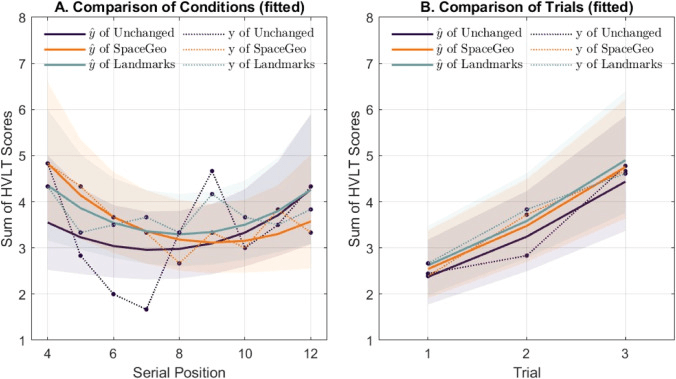
The built environment profoundly influences our brain, shaping how we perceive, remember, and interact with the world around us. Far from serving solely aesthetic or functional purposes, specific elements and characteristics of cities can have an impact of specific cognitive processes. For instance, landmarks in urban settings play a pivotal role in guiding navigational decision making and behavior, helping us to orientate ourselves, and move through complex spaces by remembering different details of the environment. Despite this understanding, the ways in which diverse environmental features affect memory remain largely unexplored. This study investigates the impact of landmarks on memory performance within a virtual urban environment. Using the Hopkins Verbal Learning Test, a measure of verbal episodic memory, in combination with immersive head-mounted Virtual Reality, participants (n = 35) navigated a virtual cityscape designed with distinct environmental variations. The conditions include landmarks, space geometry, and an unchanged condition. Results reveal that participants exposed to Landmarks and Space Geometry demonstrated enhanced episodic memory performance compared to those navigating through the unchanged condition. Specifically, participants exhibited a faster learning rate between trials and improved memory retention in environments featuring landmarks and space geometry. These findings highlight the impacts of environmental distinctiveness and suggest that both landmarks and space geometry serve as effective mnemonic components in episodic memory tasks.
 Zak's Blog